












Everything You Need to Know About the Lagos Home Ownership Mortgage Scheme (HOMS)
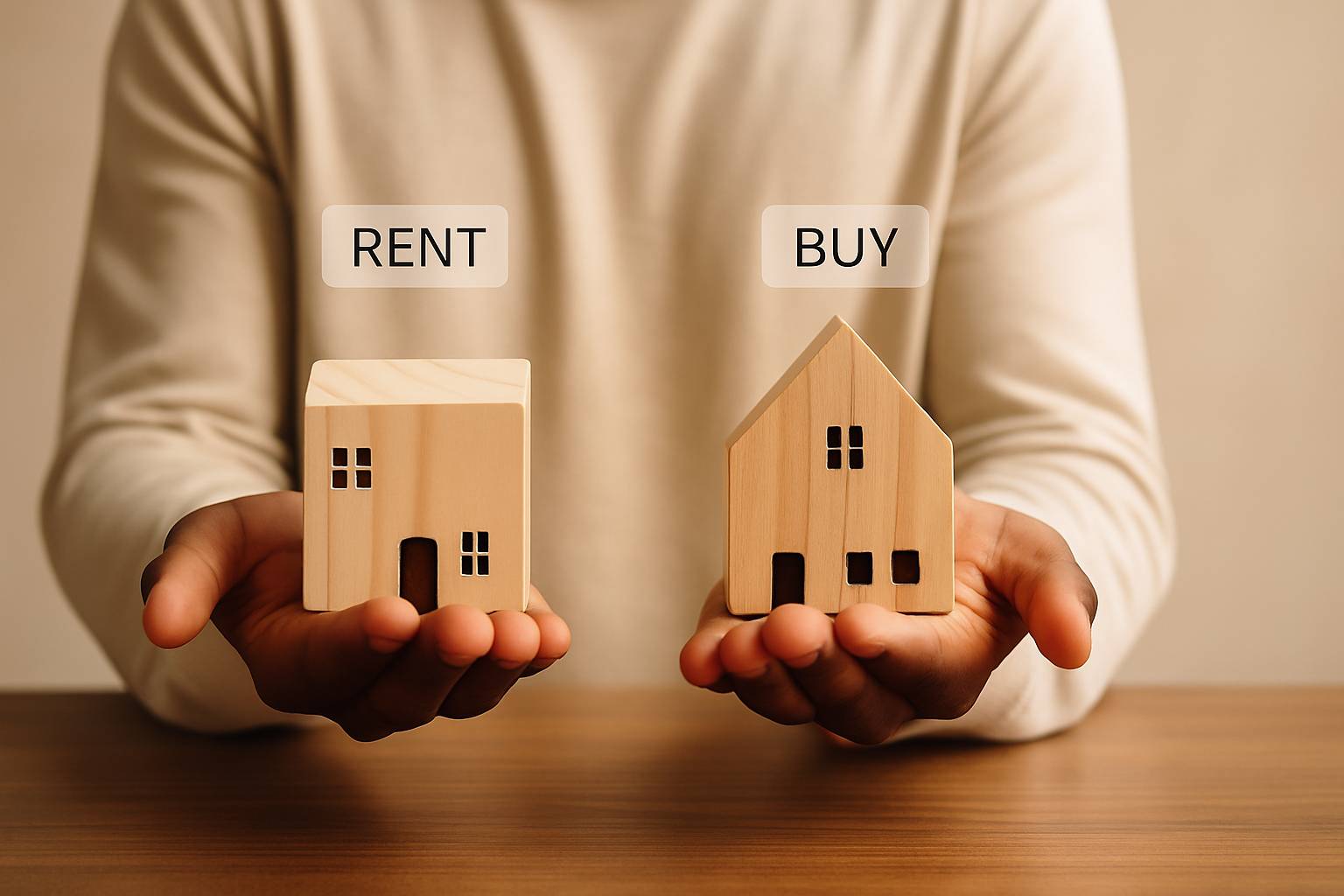
The decision to buy property in Lagos is perhaps the most significant financial choice Lagos residents will make in their lifetime. With property prices surging by 39.5% in 2024 alone and rental costs climbing over 100% in just four years, this decision has never been more financially significant for individuals and families navigating Nigeria's commercial capital.The Lagos property market has reached a critical inflection point. As Africa's largest city continues to expand beyond 20 million residents, understanding whether to rent or buy property in Lagos is crucial in protecting your financial future and building long-term wealth in one of the world's fastest-growing urban centers.Understanding the Current Lagos Property MarketThe Lagos real estate landscape has transformed dramatically over recent years. Property values have nearly doubled between 2020 and 2024, with continuing appreciation expected through 2025 and beyond. This explosive growth stems from multiple converging factors that make Lagos unique among African property markets.The city's population density drives unprecedented housing demand. With over 27% of Nigeria's urban population concentrated in its smallest state geographically, Lagos experiences constant upward pressure on both purchase prices and rental rates. Prime locations like Victoria Island, Ikoyi, and Lekki now command prices reaching one million naira per square meter, while even mid-market areas like Yaba and Surulere have seen dramatic value increases.Infrastructure development continues to reshape property values across different neighborhoods. The expansion of the Lekki-Epe Expressway, the construction of the Dangote Refinery, and the ongoing development of Eko Atlantic have created new growth corridors. Areas like Ibeju-Lekki and Epe have witnessed land appreciation exceeding 300% over the past decade, presenting compelling opportunities for those looking to buy property in Lagos that investors should consider seriously.However, inflation remains a dominant force affecting affordability. Construction material costs increased by over 100% between 2023 and 2024, with cement prices doubling from 4,000 to 8,800 naira per bag. These rising costs flow directly into property prices as developers maintain profit margins, and deciding between renting and buying becomes increasingly consequential.The True Cost of Renting in LagosRenting property in Lagos requires careful financial analysis that extends beyond just monthly or annual rent payments. The typical Lagos rental arrangement requires advance payment of one to two years upfront, creating substantial immediate cash requirements that strain household budgets.Consider the financial reality facing renters across different Lagos neighborhoods. A two-bedroom apartment in high-demand areas like Victoria Island and Ikoyi requires annual rents ranging from 2.5 million to 5 million naira. Mid-market locations like Lekki command 1.8 million naira annually, while areas like Yaba and Surulere run approximately 1.2 million naira per year. Even emerging neighborhoods like Ajah and Ibeju-Lekki require 800,000 to 1.2 million naira annually.These figures represent baseline costs. Renters must also factor in agency fees typically ranging from 5% to 10% of annual rent, legal fees for agreement preparation, and potentially caution fees equivalent to one or two months' rent. For a property renting at 2 million naira annually, these additional costs can add 200,000 to 400,000 naira to your upfront expenses.The hidden cost accumulation continues throughout your tenancy. Unlike homeowners building equity, renters face constant value erosion through regular rent increases. Lagos rents have escalated 91% over the past five years, with some areas like Gbagada and Magodo Phase 1 seeing increases of 150% and 108% respectively. This means a tenant paying 1.5 million naira today could face 2.8 million naira in just five years based on recent trends.Rental payments provide zero return on investment. Every naira paid to a landlord represents consumption rather than asset building. Over a ten-year period, a tenant spending 2 million naira annually will pay 20 million naira without any ownership stake, asset appreciation, or equity accumulation. This money simply transfers wealth from tenant to landlord while providing temporary shelter.The psychological and practical limitations of renting also deserve consideration. Tenants cannot customize their living space without landlord permission, face potential forced relocation when leases end, and lack the stability that comes with ownership. For families with children, this instability can mean changing schools and disrupting social networks.The Investment Case: Why You Should Buy Property Lagos OffersPurchasing property in Lagos represents one of the most powerful wealth-building strategies available to Nigerian residents and diaspora investors. The numbers tell a compelling story that transcends simple shelter provision.Property appreciation in Lagos has consistently outpaced inflation and most traditional investments. Areas with ongoing infrastructure development see annual appreciation rates reaching 10% to 15%, with emerging corridors like Ibeju-Lekki and Epe experiencing even higher growth. A property purchased for 50 million naira in Lekki in 2020 likely exceeds 90 million naira in value today, representing an 80% appreciation in just four years.This capital appreciation creates real wealth. Unlike rental payments that vanish monthly, property ownership allows you to capture market gains. When you buy property, Lagos investors understand you are securing shelter, while acquiring an appreciating asset that can serve multiple financial purposes throughout your lifetime.Rental income generation provides additional returns for property owners. Average rental yields across Lagos range from 6% to 8% annually, with some emerging areas delivering even higher returns. A property purchased for 50 million naira, generating 4 million naira in annual rent, provides 8% yield before appreciation. This income can offset mortgage payments or provide supplementary household revenue.The hedge against inflation becomes increasingly valuable in Nigeria's economic environment. As inflation reached 34% in mid-2024, real estate stands as one of the few assets that maintains and grows value during currency depreciation. Property ownership protects purchasing power while rental payments lose value to inflation annually.Tax advantages and estate planning benefits further strengthen the ownership case. Property owners can deduct certain expenses and benefit from preferential capital gains treatment. Real estate also serves as tangible wealth that can be transferred to children and family members, creating generational wealth that renting can never achieve.Additionally, the psychological benefits of ownership should not be dismissed. Homeownership provides security, stability, and pride that renting cannot match. You control your living environment, can renovate and improve as desired, and build roots in a community without fear of displacement.Financial Model: Rent vs Buy Comparison Over 10 YearsLet us examine the real financial difference between renting and buying property in Lagos style through a comprehensive 10-year comparison. We will use a mid-market property scenario that represents typical decisions facing many Lagos residents.For this analysis, we are considering a property with a purchase price of 50 million naira. A comparable rental property in the same area would cost approximately 2 million naira per year initially. Based on historical data, rents have been increasing by about 9% annually across Lagos, while property values have appreciated at roughly 10% each year—a conservative estimate given recent market trends.When purchasing this property, a buyer would typically need a 20% down payment of 10 million naira and secure a mortgage for the remaining 40 million naira. Current mortgage interest rates average around 22% annually over a 20-year term. Additionally, buyers should budget for transaction costs, including legal fees, agency commissions, stamp duty, and survey fees, which total approximately 7.5% of the purchase price—around 3.75 million naira in this case.Year-by-Year Financial Comparison:Renting Path:Year 1: 2,000,000 nairaYear 2: 2,180,000 nairaYear 3: 2,376,200 nairaYear 4: 2,590,058 nairaYear 5: 2,823,163 nairaYear 6: 3,077,248 nairaYear 7: 3,354,200 nairaYear 8: 3,656,078 nairaYear 9: 3,985,125 nairaYear 10: 4,343,786 nairaTotal rent paid over 10 years: 30,386,058 nairaAdditional renting costs (agency fees, moving costs, etc.): approximately 3,000,000 naira Total renting expenditure: 33,386,058 naira. Asset value at year 10: 0 naira Net position after 10 years: -33,386,058 nairaBuying Path:Initial costs:Down payment: 10,000,000 nairaTransaction costs: 3,750,000 nairaTotal initial investment: 13,750,000 nairaMonthly mortgage payment on 40 million naira at 22% over 20 years: approximately 740,000 naira. Annual mortgage payments: 8,880,000 nairaHowever, this mortgage payment includes both principal and interest. By year 10, you will have paid down approximately 8 million naira in principal, while the remaining payments go toward interest.Property value at year 10 (10% annual appreciation): 129,687,122 naira. Remaining mortgage balance at year 10: approximately 32,000,000 nairaNet equity position: 97,687,122 nairaTotal payments made over 10 years (down payment + transaction costs + mortgage payments): 102,550,000 naira Net wealth position: 27,137,122 naira (equity value minus total paid)The Wealth Difference:After 10 years, the buyer has built a net equity of 27,137,122 naira, while the renter has spent 33,386,058 naira with zero asset value. The buyer is 60,523,180 naira wealthier than the renter when comparing both cash outflow and asset accumulation.This calculation becomes even more favorable when considering that rental payments continue indefinitely while mortgage payments eventually end. After 20 years, the buyer owns a property potentially worth over 300 million naira (assuming continued 10% appreciation) while the renter continues paying escalating rent with no ownership stake.Breaking Down the Upfront Investment RequiredThe initial capital requirement represents the primary barrier preventing many Lagos residents from transitioning from renting to ownership. Understanding exactly what you need and how to structure this investment is crucial.For our 50 million naira property example, prospective buyers should prepare for:Down Payment Requirements: Most Nigerian banks require 20% to 30% down payment for residential mortgages. On a 50 million naira property, this means 10 million to 15 million naira upfront. Some mortgage programs through the Nigeria Mortgage Refinance Company or Lagos HOMS offer lower down payments for qualified buyers, sometimes as low as 10%.Legal and Transaction Costs: These mandatory expenses typically range from 5% to 10% of the property value:Legal fees for property verification and contract preparation: 1% to 2% (500,000 to 1,000,000 naira)Agency commission: 5% to 10% (2,500,000 to 5,000,000 naira)Survey and valuation fees: 400,000 to 500,000 nairaLand registration and stamp duty: 1% to 1.5% (500,000 to 750,000 naira)Governor's consent (where applicable): 3% to 5% (1,500,000 to 2,500,000 naira)Total Estimated Upfront Capital: 13,900,000 to 19,250,000 nairaThis significant sum deters many potential buyers. However, comparing this to renting reveals an interesting perspective. A tenant paying 2 million naira annually in rent plus agency fees and deposits will spend approximately 4.5 million naira over the first two years of renting. Over five years, that same tenant will spend more than 11 million naira with zero ownership, nearly equivalent to a down payment that builds equity instead.The key insight is not that buying property in Lagos requires less upfront cash—it often requires more. Rather, the question becomes whether you prefer spending money to build an asset or spending similar amounts with no return. For those with the financial capacity to buy property, Lagos analysis clearly favors ownership.Mortgage Reality: Navigating High Interest RatesThe elephant in every property purchase conversation is Nigeria's notoriously high mortgage interest rates. Currently ranging from 20% to 27% annually, these rates make monthly payments substantially higher than equivalent rent amounts, leading many to assume renting is more affordable.This assumption requires deeper examination. While monthly mortgage payments do exceed rent initially, several factors change the calculation:Principal Reduction vs Pure Expense: A portion of every mortgage payment reduces your principal balance, building equity. If your monthly mortgage payment is 740,000 naira, perhaps 200,000 naira goes toward principal while 540,000 naira covers interest. That 200,000 naira represents savings and equity building, not pure expense like rent.Fixed Payment vs Escalating Rent: Mortgage payments remain relatively stable throughout your loan term, while rents increase annually. Your year one mortgage payment equals your year 10 mortgage payment, but your rent payment could double or triple over the same period. This payment predictability provides budgeting certainty.Alternative Mortgage Options: Some banks offer preferential rates for specific customer segments. Diaspora mortgages sometimes feature US dollar denominations with rates as low as 6.5% to 7% for qualified applicants. The Nigeria Mortgage Refinance Company provides liquidity support to primary mortgage institutions, potentially lowering rates for end borrowers.Strategic Payoff Approaches: Many property buyers use mortgages as a tool rather than a long-term debt burden. By making extra principal payments when possible, you can dramatically reduce total interest paid and shorten your loan term. Some buyers finance their purchase initially, then refinance or pay off the balance early when financially able.Even with high interest rates, the mathematical advantage favors buying when you factor in appreciation. A property appreciating 10% annually while you pay 22% interest still makes financial sense when you consider you are only financing 80% of the value, your payment includes equity building, and you capture 100% of the appreciation on the full property value.Emerging Neighborhoods: Where to Buy Property Lagos Smart Investors ChooseLocation selection dramatically impacts investment returns when you buy property in Lagos strategically. Understanding which neighborhoods offer the best combination of affordability, appreciation potential, and quality of life determines long-term financial success.Ibeju-Lekki: The Fastest Appreciating CorridorLand values here have increased over 300% in the past decade, driven by the Dangote Refinery, Lekki Free Trade Zone, and proposed new international airport. Properties that sold for 500,000 naira per plot in 2019 now command 5 million to 40 million naira, depending on the specific location. This area suits long-term investors willing to wait for full infrastructure development.Epe: Affordable Entry with Growth Potential Epe offers some of Lagos's most affordable property prices while maintaining strong appreciation potential. Two-bedroom houses start around 15 million to 25 million naira, making ownership accessible to middle-income buyers. The ongoing road improvements and gradual development make this area increasingly attractive.Ajah: Established Infrastructure with Continued Growth Ajah provides a middle ground between emerging areas and premium locations. Properties here appreciate steadily at 8% to 12% annually while offering established amenities, schools, and commercial centers. Two-bedroom apartments range from 25 million to 35 million naira.Yaba: The Tech Hub As Lagos's innovation district, Yaba attracts young professionals and technology workers. This demographic drives strong rental demand, making it excellent for investors seeking rental income. Properties range from 30 million to 50 million naira for standard apartments, with solid rental yields of 7% to 8%.Lekki Phase 1 and 2: Premium Stability These established areas offer stable appreciation with excellent infrastructure and amenities. While entry prices are higher (50 million to 150 million naira for standard houses), the areas provide security, schools, and lifestyle benefits. Appreciation here runs 8% to 10% annually with lower volatility than emerging areas.Magodo Phase 1 and 2: Mainland Value For buyers preferring the mainland, Magodo offers gated estates with good security at 30 million to 60 million naira for terraces and duplexes. The area has seen 108% rental growth over five years, indicating strong investment potential.Location choice should balance your budget, timeline, and risk tolerance. Emerging areas offer higher appreciation potential with longer development timelines, while established neighborhoods provide immediate quality of life with steadier but solid returns.When Renting Makes Sense: Exceptions to the RuleDespite the strong financial case for buying property, Lagos residents should recognize situations where renting proves more appropriate:Short-Term Lagos Residents: If you plan to live in Lagos for fewer than three years, renting typically makes more sense. Transaction costs when buying property in Lagos can consume much of your short-term appreciation. The break-even point for buying versus renting generally falls between four and six years.Career or Location Uncertainty: Young professionals still establishing their careers may need flexibility to relocate for opportunities. Renting preserves this mobility without the complexity of selling property when circumstances change.Insufficient Capital Reserves: Buying property requires not just a down payment and transaction costs but also emergency reserves for maintenance and unexpected expenses. If purchasing would deplete your entire savings, renting while building a larger financial cushion may be prudent.Market Timing Concerns: If you believe Lagos property prices have reached unsustainable levels or expect a market correction, delaying purchase while renting could allow buying at better prices later. However, timing the market is notoriously difficult, and waiting often means missing appreciation.Exploring Different Neighborhoods: New Lagos residents may benefit from renting in different areas to understand the city's neighborhoods before committing to a purchase location. This exploration period can prevent buying in an area that does not match your lifestyle or commute needs.Business Capital Allocation: Entrepreneurs might choose to rent housing while directing capital into their businesses, where returns potentially exceed real estate appreciation. This strategic capital allocation can maximize overall wealth creation.Even in these scenarios, renting should be viewed as temporary. The goal should be to transition to ownership as soon as circumstances allow. The wealth-building advantage of ownership is too significant to forfeit indefinitely.Action Steps: Moving From Renter to OwnerTransitioning from renting to ownership requires deliberate planning and systematic execution. Follow these steps to position yourself for successful property purchase:Step 1: Assess Your Financial Position Calculate your total income, current monthly expenses, and savings capacity. Determine how much you can realistically save monthly while maintaining your current lifestyle. Review your credit history and employment stability, as these affect mortgage approval.Step 2: Define Your Savings TargetBased on your desired property price range, calculate required down payment (20% to 30%) plus transaction costs (7% to 10%). Add an emergency buffer of 2 million to 5 million naira for unexpected expenses and maintenance. Set a specific monthly savings amount and timeline.Step 3: Increase Your Savings Rate Look for ways to accelerate savings through side income, expense reduction, or investment returns. Consider temporarily moving to a less expensive rental to save more toward your property purchase. Many successful property buyers make significant sacrifices for 2 to 3 years to accumulate their down payment.Step 4: Research Locations and PropertiesBegin attending property viewings in your target areas even before you are ready to purchase. Understand pricing trends, neighborhood characteristics, and available property types. Build relationships with reputable estate agents who understand your needs.Step 5: Understand Mortgage Options Consult multiple banks about their mortgage products, interest rates, and qualification requirements. Compare offerings from commercial banks and primary mortgage institutions. Determine whether you prequalify for special programs through NMRC or Lagos HOMS.Step 6: Verify Property DocumentationWhen you find a potential property, engage a qualified real estate lawyer to conduct due diligence. Verify the Certificate of Occupancy, survey plans, and seller ownership. This verification prevents purchasing property with title defects that create future problems.Step 7: Negotiate and Close Work with your agent to negotiate purchase price and payment terms. Prepare your down payment and closing costs. Finalize mortgage arrangements with your bank. Complete all required documentation and transfer funds through proper legal channels.Step 8: Budget for OwnershipAfter purchase, establish a maintenance reserve for property upkeep, insurance, and unexpected repairs. Budget for annual property taxes and service charges where applicable. These ongoing costs differ from renting and require planning.The Verdict on Buying Property in Lagos For those who can afford to buy property Lagos offers, the decision should be clear: purchase as soon as financially feasible. The combination of ongoing population growth, limited housing supply, infrastructure development, and economic expansion ensures continued property value appreciation for decades to come.The question is not whether to eventually own property in Lagos, but rather how quickly you can position yourself to make that transition. Every year spent renting represents a lost opportunity to build the substantial wealth that homeownership provides.Start your property ownership journey today with www.ballers.ng. BALL offers verified properties with flexible payment plans, allowing you to become a homeowner and build lasting wealth. Your future financial security depends on making this crucial decision correctly. Visit www.ballers.ng and BALL in property!